What is RPA? A Complete Guide for Businesses
Table of Contents
Subscribe To Our Newsletter

Robotic Process Automation (RPA) is a software technology that uses rule-based bots to perform repetitive, high-volume business tasks, mimicking human interactions with digital systems without modifying existing infrastructure. It allows enterprises to automate data entry, invoice processing, report generation, and hundreds of other routine workflows across departments.
For businesses still running manual processes, RPA is not a future investment, it is a present competitive disadvantage to ignore. According to Deloitte’s Global RPA Survey, 78% of organizations that have already implemented RPA expect to significantly increase their investment in the next three years.
This guide explains what RPA is, how it works, which processes it automates best, how it differs from AI, and what businesses need to know before implementation.
Key Takeaways
- RPA uses software bots to automate repetitive, rule-based digital tasks.
- It works without replacing existing IT systems, bots operate on top of them.
- Best-fit processes include data entry, invoicing, HR onboarding, and compliance reporting.
- RPA is not AI, but combining both creates Intelligent Automation.
- Implementation typically takes 6–16 weeks depending on process complexity.
What is Robotic Process Automation (RPA)?
Robotic Process Automation (RPA) is a form of business process automation technology that deploys software robots which are commonly called bots. To execute structured, repetitive tasks by interacting with applications, databases, and user interfaces the same way a human employee would. These bots can log into systems, copy and paste data, fill forms, extract information from documents, trigger responses, and communicate with other systems all without human intervention.
The term ‘robotic’ does not refer to physical robots. It refers to software agents that mimic human digital behavior. RPA operates at the UI layer, meaning it works across virtually any application, legacy systems, web platforms, ERP software, or desktop tools without requiring API access or code changes to those systems.
RPA is distinct from traditional automation scripts because it is designed to be configured by business users not just developers through low-code or no-code interfaces. This makes it accessible to operations, finance, HR, and compliance teams without deep engineering involvement.
Enterprise-grade RPA software providers include UiPath, Automation Anywhere, and Blue Prism, each offering platforms for designing, deploying, and monitoring bots at scale.
How Does RPA Work in Business?
RPA development solutions works by deploying software bots that follow a defined sequence of steps across one or more digital systems. The bot replicates the exact actions a human operator would perform keystrokes, clicks, data reads, form submissions, and system navigation based on pre-configured rules and logic.
A typical RPA workflow in a business context follows these stages:
- Process identification: The business team selects a repetitive, rule-based task that consumes measurable time and has clearly defined inputs and outputs.
- Bot design: An RPA developer or business analyst uses a visual workflow tool to map the exact steps the bot should perform.
- Integration: The bot is connected to the relevant systems, ERP, CRM, email platform, spreadsheets, or web portals using the UI layer, not APIs.
- Testing: The bot is validated in a test environment to confirm accuracy, handle exceptions, and verify output quality.
- Deployment: The bot goes live and runs attended (with human oversight) or unattended (fully automated, triggered by a schedule or event).
- Monitoring: A control room or dashboard tracks bot performance, error rates, uptime, and task volume.
For example, an accounts payable team receiving 500 invoices daily can deploy an RPA bot to extract vendor details, match purchase orders, flag discrepancies, and post approved invoices to the accounting system reducing a multi-hour daily task to minutes.
What Are the Benefits of Implementing RPA?
Implementing robotic process automation delivers measurable operational, financial, and compliance benefits across business functions. The core advantages are:
- Cost reduction: RPA bots operate 24/7 without overtime, sick leave, or errors from fatigue. Organizations typically report 25-50% cost savings on automated processes (McKinsey Global Institute, 2023).
- Accuracy and compliance: Bots execute tasks identically every time, eliminating human error in data entry, regulatory filings, and audit trails. Every action is logged, creating a verifiable compliance record.
- Speed and throughput: A bot can process transactions 5–10 times faster than a human operator, enabling same-day processing for workflows that previously had multi-day turnaround.
- Scalability: During peak periods, tax season, month-end close, open enrolment organizations can deploy additional bots instantly without hiring cycles.
- Employee redeployment: Staff freed from repetitive tasks can be redirected to higher-value work including analysis, customer engagement, and strategic planning.
- System compatibility: RPA integrates with legacy systems that lack modern APIs, extending the life of existing infrastructure without costly upgrades.
These benefits compound over time. Organizations that begin with one automated process often expand to 20–50 automated workflows within two years as the ROI model becomes validated internally.
Which Business Processes Are Best Suited for RPA?
RPA delivers the highest return on processes that are rule-based, repetitive, high-volume, stable, and performed across multiple digital systems. Not every business process is a good RPA candidate, processes requiring contextual judgment or unstructured data inputs are better suited for AI or human handling.
Finance and Accounting
- Invoice processing and three-way matching
- Bank reconciliation and journal entry posting
- Accounts payable and receivable management
- Financial statement compilation and reporting
- Tax filing and audit document preparation
Human Resources
- Employee onboarding and offboarding workflows
- Payroll data validation and processing
- Benefits enrolment and policy updates
Customer Operations
- Customer data updates across CRM and billing systems
- Order entry, tracking, and status notifications
- Refund processing and claims management
IT and Compliance
- User access provisioning and deprovisioning
- Regulatory compliance reporting
- System monitoring and incident ticket creation
A practical rule of thumb: if an employee can describe the task as a step-by-step checklist, and the task is performed more than 20 times per day, it is likely a viable RPA candidate.
What Is the Difference Between RPA and AI?
RPA and AI are complementary technologies that serve fundamentally different purposes. RPA executes defined rules on structured data. AI learns from data to make decisions, recognize patterns, and handle unstructured inputs. The key differences are:
| Dimension | RPA | Artificial Intelligence |
| Input type | Structured data only | Structured and unstructured |
| Learning ability | None – follows fixed rules | Learns and improves from data |
| Decision making | Rule-based, binary | Probabilistic, contextual |
| Use case | Repetitive task execution | Pattern recognition, prediction |
| Setup | Low-code configuration | Model training required |
| Example | Copy invoice data to ERP | Extract data from scanned PDF |
When RPA and AI are combined, a model referred to as Intelligent Automation (IA), bots can process unstructured inputs such as scanned documents, handwritten forms, and natural language emails. AI handles the interpretation; RPA handles the execution. This combination significantly expands automation coverage beyond structured workflows.
How to Successfully Implement RPA in Your Business?
A structured RPA implementation follows a defined methodology to ensure the right processes are selected, the bots are built correctly, and the automation delivers sustainable value.
- Step 1: Process discovery: Identify and document high-volume, rule-based tasks using process mining tools or manual time-and-motion analysis.
- Step 2: Feasibility and ROI assessment: Estimate current task cost (hours × FTE rate × volume), compare with bot development and licensing costs, and calculate payback period.
- Step 3: Platform selection: Choose an RPA platform based on your IT environment, scalability needs, and internal capability, UiPath, Automation Anywhere, and Microsoft Power Automate are leading enterprise options.
- Step 4: Bot development: Configure bots using the platform’s visual designer, incorporating exception handling, logging, and escalation paths for edge cases.
- Step 5: UAT and parallel running: Run bots alongside human operators to validate accuracy before full deployment.
- Step 6: Go-live and monitoring: Deploy bots into production with a monitoring dashboard tracking task volume, error rate, and uptime.
- Step 7: Scale and optimize: Identify the next process candidates and build an internal Centre of Excellence (CoE) to govern and expand the automation programme.
How CodiantAI Helps Businesses Implement RPA Successfully Across Enterprise Workflows?
Successful RPA projects depend on selecting the right processes, designing scalable automation, and ensuring long-term governance rather than simply deploying bots.
Businesses evaluating RPA implementation services can benefit from expertise in:
- Process discovery and automation opportunity assessment
- Enterprise RPA consulting and implementation strategy
- Intelligent Automation combining RPA with AI and machine learning
- Legacy system integration without major infrastructure changes
- Bot monitoring, optimization, security, and governance
- Scalable automation roadmaps across finance, HR, operations, healthcare, retail, and logistics
Whether the objective is reducing manual effort, improving compliance, or accelerating digital transformation, a structured implementation approach helps organizations achieve measurable business outcomes while maximizing long-term automation ROI.
Conclusion: Is RPA the Right Investment for Your Business?
Robotic Process Automation is a proven, high-ROI technology for organizations running significant volumes of manual, rule-based processes. It reduces cost, improves accuracy, ensures compliance, and frees skilled employees for higher-value work without requiring wholesale system replacement.
The businesses that benefit most from RPA are those that approach it strategically: starting with one or two high-impact processes, building internal governance capability, and expanding their automation footprint based on validated results rather than broad promises.
If your organization is evaluating enterprise automation, intelligent automation solutions, or AI and RPA solutions, the first step is a structured process assessment to identify where automation can deliver the clearest, fastest return. Expert RPA consulting services can compress that discovery phase and help you avoid the implementation pitfalls that undermine early-stage programmes.
RPA is not the answer to every operational challenge but for the right processes, it is one of the fastest paths from manual inefficiency to measurable business performance.
Ready to Turn Manual Business Processes into Intelligent Automated Workflows Today?
Discover where RPA can automate repetitive tasks and deliver measurable operational efficiency across your business.
Frequently Asked Questions
Businesses should look for processes that are rule-based, high-volume, performed across multiple systems, and have clearly defined inputs and outputs with minimal exceptions. A practical starting point is to survey department heads for tasks that consume more than 10 hours per week in manual data handling. Process mining tools such as Celonis or UiPath Process Mining can map actual workflow patterns and flag automation candidates automatically.
Banking, financial services, and insurance (BFSI) lead RPA adoption due to high transaction volumes and strict compliance requirements. Healthcare organizations use RPA for claims processing, patient record management, and regulatory reporting. Retail and e-commerce firms automate order management, inventory updates, and returns. Manufacturing and logistics companies use RPA for supply chain coordination, procurement, and vendor management. Any industry with significant back-office data processing is a strong RPA candidate.
A focused RPA implementation for a single, well-defined process typically takes 6 to 12 weeks from discovery to go-live. Complex enterprise deployments involving multiple processes, legacy system integrations, and change management programmes generally require 3 to 6 months. The timeline depends on process complexity, data quality, IT environment readiness, and whether the organization is building internal RPA capability or engaging an RPA consulting services partner.
Yes. RPA is specifically designed to work with existing systems without requiring API access, code changes, or system upgrades. Bots interact with ERP platforms such as SAP and Oracle, CRM systems such as Salesforce, legacy databases, web portals, email clients, and desktop applications through the user interface layer. This makes RPA particularly valuable for organizations running older infrastructure that lacks modern integration capabilities.
The most frequent challenges include poor process selection (automating unstable or exception-heavy processes), inadequate exception handling in bot design, resistance from employees concerned about job displacement, and lack of internal governance through a Centre of Excellence. Organizations also underestimate the ongoing maintenance required when underlying systems change, which can break bot scripts. Engaging experienced RPA implementation services and establishing clear change management protocols significantly reduces these risks.
Featured Blogs
Read our thoughts and insights on the latest tech and business trends
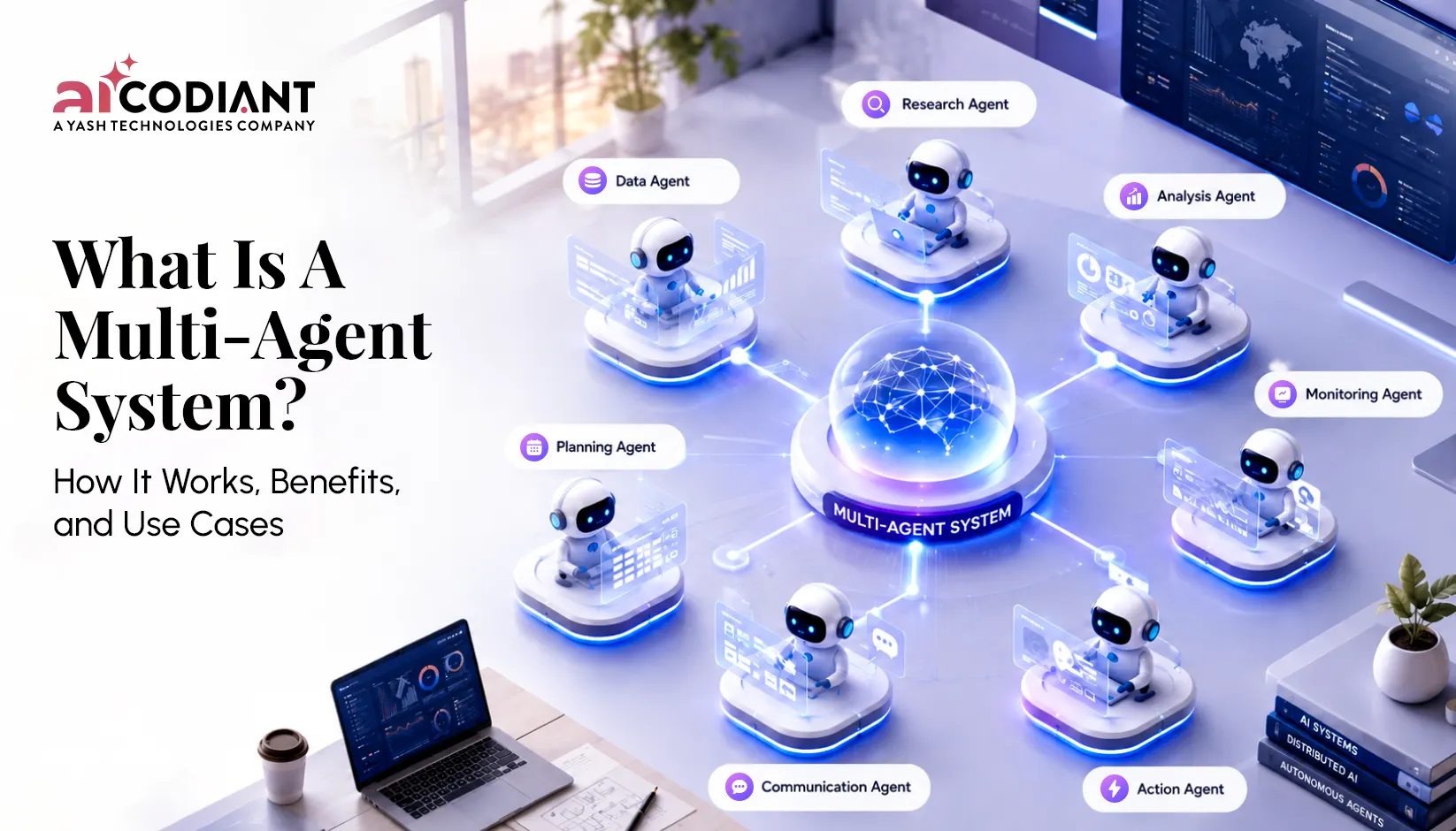
What Are Multi-Agent Systems? Use Cases and Business Applications
- August 20, 2026
- AI Agent Development
Multi-agent systems are artificial intelligence environments in which multiple specialised AI agents work together to complete a shared task or achieve a common objective. Instead of asking one agent to manage an entire process, the... Read more
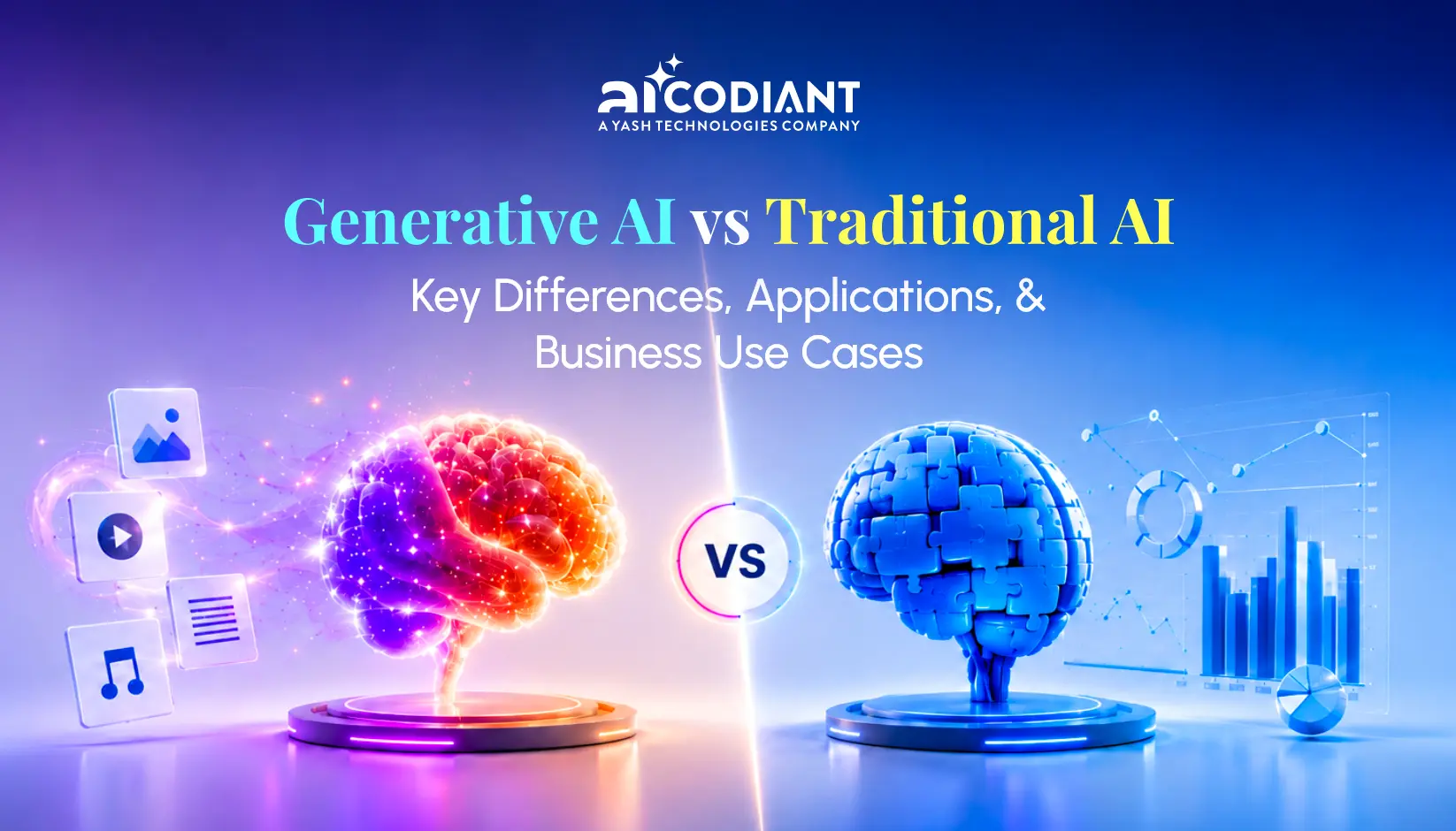
The Difference Between Generative AI and Traditional AI: The Enterprise Guide
- August 13, 2026
- Artificial Intelligence
Generative AI and Traditional AI solve different business problems. Traditional AI analyses data to predict outcomes, classify information, detect patterns, and support decisions. Generative AI creates new content, including text, images, code, audio, video, summaries,... Read more

Hiring Generative AI Developers That Scale Your Enterprise AI: A Detailed Guide
- July 28, 2026
- Generative AI
Hiring Generative AI developers means finding engineers who can design, build, and deploy large language models, RAG pipelines, and AI-powered workflows that solve real business problems at scale. For enterprises, the wrong hire costs more... Read more